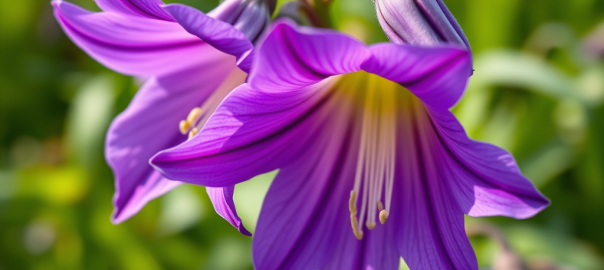
Here are the TLC directions on dealing with Creeping Bellflower:
Creeping Bellflower (CBF) Control
Facebook Group for property owners dealing with this plant: *Creeping Bellflower Battles
*Not affiliated with The Land Conservancy of McHenry County
*Eradication of this difficult invasive plant takes a multi-pronged approach that requires diligence and patience. There are multiple steps and options.
- Manual control: Steps 1a-c will need to be repeated for many years
- At a minimum, pull or cut close to the ground to prevent seed production. One individual plant can produce up to 15,000 seeds each year.
- Dig deep: dig up to 10 inches or deeper and pull out both the fibrous roots and the tubers and rhizomes.
- Disposal of plant parts: Carefully remove and dispose of all plant parts from the site. You can dry the plant parts on a tarp, or cook them in a black garbage bag mixed with a little water and left in the sun. Once they’re sterilized, you can burn them or dispose with landscape waste.
- Important to get densely planted native plants in to compete (like common violets, wild ginger, wild geranium, zigzag goldenrod, big-leaved aster). A lot of these natives can spread aggressively and have root structures that make them ideal for competing with creeping bellflower and preventing it from re-growing once you’ve eradicated it.
- Learn to identify CBF in all of its growth stages to prevent mistaking it for a native plant. Minnesota Wildflowers has descriptions and photos of the plant in its various growth stages.
- Chemical control: 5% Glyphosate with surfactant
- Active ingredient 41% glyphosate mixed with surfactant and water
- To make 1 quart of this herbicide mix at the recommended 5% concentration: Combine 32 oz water, 1oz herbicide, 1/3oz surfactant. Apply with a sponge brush for a very targeted application if necessary, or a spray bottle or backpack sprayer if a widespread application is needed. Glyphosate will kill other plants, so be very careful with its application.
- The correct concentration and addition of the surfactant is key to herbicide working on this plant.
- Throughout the growing season (April-October), watch for new growth of CBF. If it appears, treat it with the above herbicide mix.
- The following spring after treating, plant a dense mix (1 plant every 6-12”) of any of the following native plants from live plugs: common violets, wild ginger, wild geranium, zigzag goldenrod, big-leaved aster. A lot of these natives can spread aggressively and have root structures that make them ideal for competing with creeping bellflower and preventing it from re-growing once you’ve eradicated it.
- Learn to identify CBF in all of its growth stages to prevent mistaking it for a native plant. Minnesota Wildflowers has descriptions and photos of the plant in its various growth stages.
Thank you!
Carol Elkins
Conservation@Home Assistant
Email: celkins@conservemc.org
Mobile: 847-894-8196
 Countryside Garden Club